Dental services in Los Algodones
Treatments
From a routine cleaning to a full set of implant-supported teeth. If you are not sure what you need, start with an exam and we will explain your options.
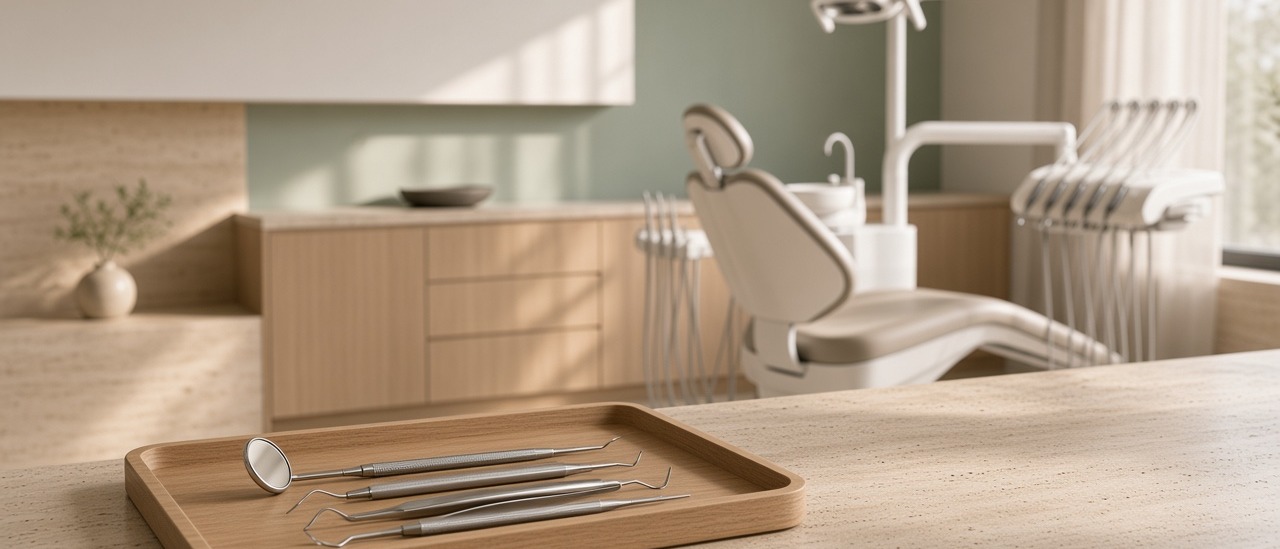
Implants and full-arch
Fixed replacements for one tooth, several teeth or a whole arch.
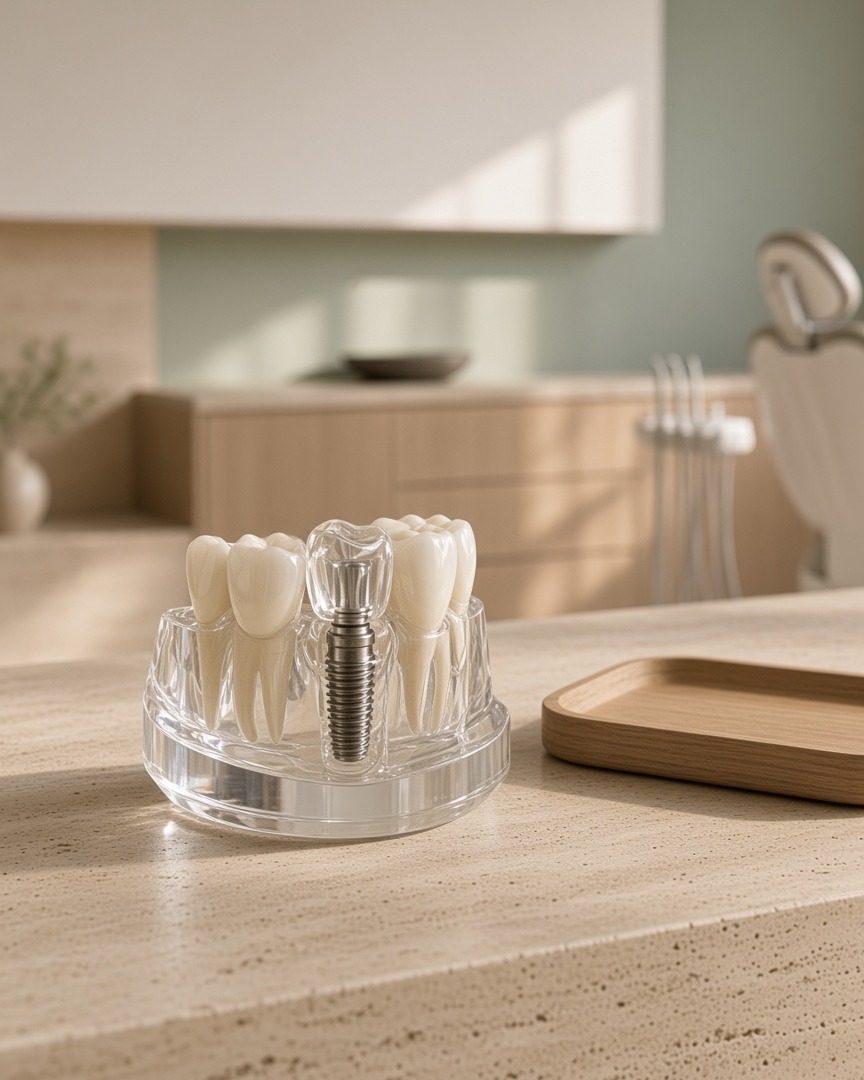
Single dental implant
A titanium post placed in the jaw, with an abutment and a crown on top. It replaces one tooth without touching the teeth beside it.
All-on-4
A full arch of fixed teeth supported by four implants. Often an option when there is not enough bone for an implant per tooth.
All-on-6
The same idea with six implants, which spreads the bite over more support.
Bone graft and sinus lift
Procedures that rebuild bone where it has been lost, so an implant has something solid to hold on to.
Crowns
Zirconia or porcelain caps that cover a damaged tooth and restore its shape and strength.
Bridges
One or more replacement teeth held in place by crowns on the teeth next to the gap.
Dentures
Full or partial removable teeth, including relines for dentures that no longer fit well.
Root canal
Removes the infected tissue inside a tooth so the tooth can be kept, usually followed by a post and crown.
Crowns and restorations
Repairing teeth that are broken, worn, infected or missing.
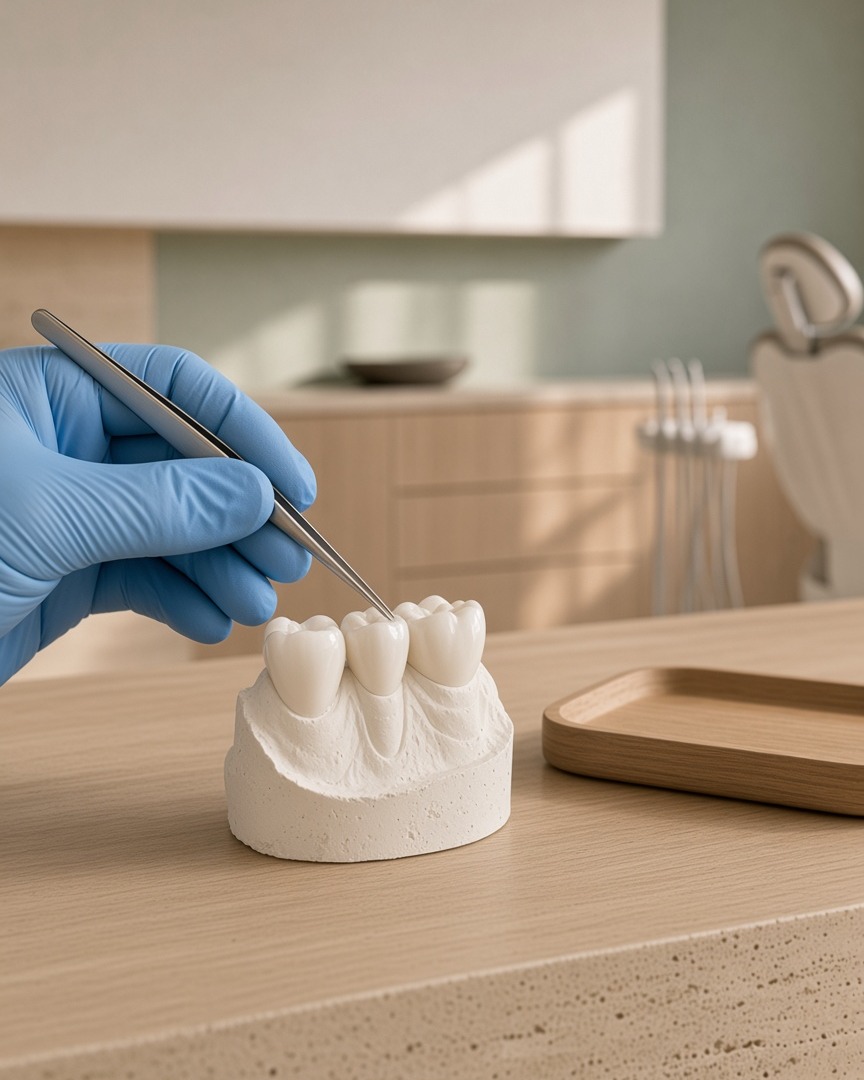
Cosmetic and general
Changing the color or shape of healthy teeth, and the everyday care that keeps them that way.
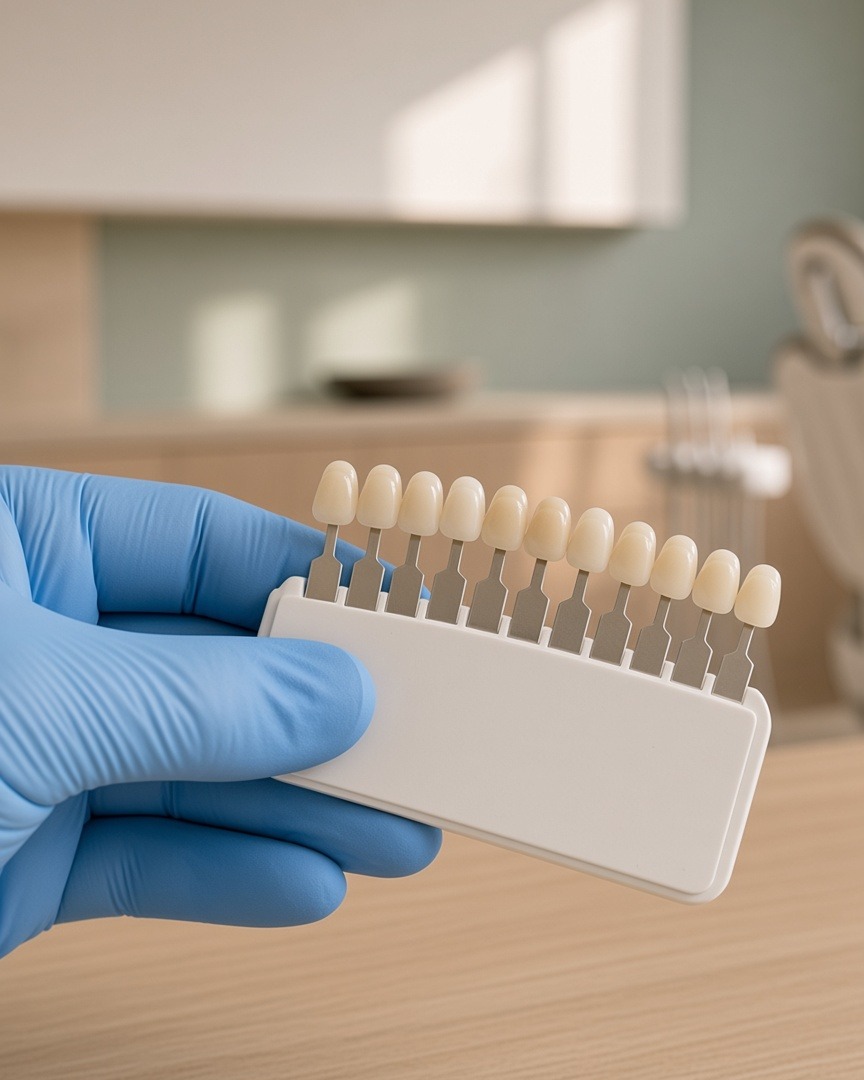
Porcelain veneers
Thin porcelain shells bonded to the front of the teeth to change their shape and shade.
Whitening
An in-office treatment that lightens the natural color of your teeth in one visit.
Exam and X-rays
A full look at your teeth and gums, followed by a written treatment plan.
Cleaning and deep cleaning
Routine cleaning, or scaling below the gum line when there are signs of gum disease.
Fillings
Tooth-colored composite fillings for cavities and small chips.
Extractions
Simple and surgical extractions, including wisdom teeth.
Not sure which treatment you need?
Send us your X-rays or the plan from your U.S. dentist. We will tell you what we recommend and what it costs.
Treatment guide
Dental implants, crowns, and full-arch care in Los Algodones
Sienna Dental is a clinic in Los Algodones, Vicente Guerrero, Baja California, for people who cross from Yuma and the rest of the Southwest. This page explains the treatments we plan most often. It is education, not a diagnosis. The exam decides what belongs in your written estimate.
Dental implants in Los Algodones
A dental implant replaces a missing tooth with a small titanium post set in the jaw, an abutment, and a crown. The post takes the place of the root. The crown is the part you see. Because the implant stands on its own, the teeth on either side do not have to be cut down to hold a bridge.
An implant is not a same-day product you pick from a menu. The bone has to be tall enough and wide enough, the gums have to be healthy enough, and the bite has to leave room for the crown. Healing, the time the bone accepts the post, is different for each person. We will not tell you that you are a candidate until we have examined you and looked at current images.
A single implant or a dental bridge
A traditional bridge replaces one missing tooth by crowning the teeth next to the space and joining them with a false tooth. It can be the right choice when those neighboring teeth already need crowns, or when an implant is not suitable. An implant leaves those teeth alone. The written plan names which option we recommend and why, and the pricing page shows the estimate range for each.
All-on-4 full-arch dental implants
All-on-4 is a way to support a full arch of teeth on four implants. The back implants are often placed at an angle so they can use the bone that is still there. People ask about it when most of the teeth in one jaw are missing, failing, or are about to be removed. It is a full-arch prosthesis, not four separate crowns.
Four implants are not automatically enough. If the bone in the front of the jaw is too thin, or the bite is not favorable, the plan may be six implants, a graft first, or a denture that is not fixed. A temporary set of teeth and the final bridge are different stages. We do not promise a finished full arch on the day you walk in. After the exam we tell you how many visits your case needs and what each visit is for.
All-on-6 and other full-arch plans
All-on-6 uses six implants to support the same kind of full-arch bridge. More fixtures can be useful when the exam shows enough bone to place them, and when the dentist wants more contact between the bridge and the jaw. Some plans use a different number. “Full mouth dental implants” usually means both arches, upper and lower, and the estimate is written per arch. Compare that with a single implant before you travel: they are different operations, different chair time, and different fees.
Bone grafting before an implant
When a tooth has been missing for years, the ridge of bone underneath often shrinks. A bone graft adds volume so an implant has something to hold. A graft is its own procedure, with its own healing time, and it is not required for every implant. All-on-4 was developed in part for jaws with less bone in the back, but it does not make grafting unnecessary in every case. If a graft is likely, it appears as its own line on the estimate. If the images are not enough to know, we say so.
Zirconia crowns and dental bridges
A crown covers a tooth that is cracked, heavily filled, or has had a root canal. Zirconia is a ceramic we use for many of those crowns. The shade is chosen against your other teeth with a shade guide, in daylight when we can. A bridge is a row of joined crowns used to replace a missing tooth between two others. A crown on an implant is planned with the implant, not as a separate surprise at the end.
Crowns are made outside the mouth. That usually means a preparation visit and a seat visit, unless your plan says otherwise. Bring any shade notes or photos from your dentist at home if a front tooth is involved. The fee on the estimate is for the material and the visits we list. If the tooth needs a post, a buildup, or a root canal first, those are separate lines.
Dentures and implant-supported dentures
A complete denture rests on the gums. A partial denture replaces some teeth and uses clasps or other attachments on the teeth that remain. An implant-supported denture clips or fixes onto implants so it moves less when you eat and speak. People often ask for this after years in a loose denture. The plan has to say whether the denture comes off for cleaning or stays fixed, how many implants it needs, and whether the current denture can be used as a reference. A full-arch fixed bridge and a removable implant denture are not the same treatment.
Root canal treatment
A root canal, or endodontic treatment, removes inflamed or infected tissue from inside a tooth, cleans the canals, and seals them. The tooth usually needs a crown afterward, because a tooth that needed a root canal is often fragile. The alternative, when the tooth cannot be kept, is extraction and then a decision about an implant, a bridge, or leaving the space. We explain both before you choose. Pain, swelling, or a deep crack can change what is possible on the day.
Porcelain veneers and teeth whitening
A veneer is a thin ceramic facing bonded to the front of a tooth. It can change color and shape. It is a restorative treatment, even when the reason is appearance: the tooth is prepared, an impression or scan is taken, and the veneer is made to a shade we agree on. Whitening lightens natural enamel. It does not change the shape of a tooth, and it does not whiten crowns, veneers, or fillings that are already in place. If you want both, whitening usually comes first so the new ceramic can match the lighter shade.
Cleanings, fillings, and extractions
A cleaning, or prophylaxis, removes plaque and tartar when the gums are healthy. If the exam shows deeper gum disease, the plan is a deeper cleaning, not a routine polish. A filling repairs decay. The material and the size of the cavity are on the estimate. An extraction removes a tooth that cannot be restored, including a wisdom tooth when that is what the exam shows. An extraction is often the first step toward an implant or a denture, and the timing between removal and the next step is part of the written plan.
How a treatment plan is written
Send X-rays, a photo of your smile, or the plan from your dentist at home before you travel. We reply with what those records suggest and what they cannot show. At the clinic the dentist examines you, explains the options in English or Spanish, and confirms the fee in U.S. dollars. The number can change if the exam finds a crack, an infection, or bone loss the images missed. You get that correction in writing before treatment starts. Nothing on this page is a promise of a result.
Request a consultationCommon questions
Before you book a dental visit in Los Algodones
How many visits does a dental implant take?
Usually more than one. The post is placed, the bone heals, and the crown is made and seated. Some cases also need an extraction or a graft first. The exam gives you the number of visits for your mouth, not a generic calendar.
Can a full arch be finished in one trip?
Sometimes a temporary arch can be made during the implant visit, and the final bridge comes later. Sometimes the plan is staged on purpose. We will not tell you it is one trip until the dentist has seen the bone, the bite, and the teeth that have to come out.
Do you see patients coming from Yuma?
Yes. Most of our patients cross at Andrade, park on the California side, and walk over. The clinic is in Los Algodones, at Fresno Street, 21970, Vicente Guerrero. Hours are Monday to Friday, 8 am to 4 pm, and Saturday 8 am to 2 pm.
Is the price on the website my fee?
No. The figures are estimates in U.S. dollars, including the U.S. comparison column. Your fee is the one written after the exam. Read the notes on the pricing page before you compare a single crown with a full arch.
What should I send before I travel?
Your name, a phone number, the teeth or the problem you want help with, and any recent X-rays or photos. If another dentist gave you a plan, send that too. We would rather tell you we need a new image than guess.
Can I do the visit in English?
Yes. English and Spanish are both used on the phone and in the chair. Say which you prefer when you write.